Mar 20, 2011

Why does nobody die in movies anymore?

Jay Michaelson analyses the theme of fate in The Adjustment Bureau:

"Fate is supposed to be fate: it’s final, and it’s the way it is. In religious and spiritual systems that subscribe to it, the best thing a religious person can do is resign oneself to it, to cultivate the serenity to accept the things one cannot change, to paraphrase theologian Reinhold Niebuhr. But not in Hollywood, where human agency knows no bounds. Of course Norris shouldfollow his heart, disobey God’s plan, and marry the girl of his dreams. And of course he can; while Norris frets about free will, it’s obvious that he does have it. He’s up against some powerful adversaries, but he calls the shots. We know all this because we know Hollywood’s sentimental religion, which is indeed a kind of neo-Romantic fanatic narcissism. And it is fanatic: once Norris makes his decision, he risks his own life, her life, and the life of countless collateral damage casualties."
In this of course, the film delivers exactly the same message as almost every other modern film on the subject of that old pseudo-debate, free will versus fate. Not that Hollywood was always like this. Reading Stefan Kanfer's recent biography of Bogart I was struck by how casually contemporary audiences accepted the fact of Bogart's death at the end of his movies, and how the notion of paying the price for living in a fallen, sinful world seems enfolded in the very shadows of film noir. It's so rare that anyone dies at the movies these days, which is why I was so struck by Jeremy Renner's last stand in The Town, slurping on a coke before stepping out into a hail of bullets. I blame video games, and in particular the modular thinking that allows heroes to choose between an array of plot options which they don and doff like a clip-on tie. Once Keanu Reeves got the chance of a do-over in The Matrix, downloading whichever skills were necessary to get him out of the hole he happened to find himself in, that lovely bone-weariness with which Bogart ascended the mountain to meet his fate in High Sierra, or made his way through the jungle in The Treasure of the Sierra Madre, was lost from American movies, seemingly for good. Bogart didn't need a do-over. Once was enough.

Why everything is FUBAR contd.

"It's not that this kind of presidential adventurism is new; but the candidate who vowed to restore America's constitutional balance represents the most powerful example of the resilience of the imperial presidency to date - even after the debacles in Iraq and Afghanistan. McCain's endorsement of presidential war-making would have been totally predictable. Obama's legitimation of it, after explicitly rejecting it in the campaign, is pretty solid proof that it's now an indelible part of the way this country operates." — Andrew Sullivan
To which we can add: detention without trial, bail-outs for the rich, a permanent ratification of insane tax rates, looser gun laws, and so on. That's been the real eye-opener of the Obama presidency, for me — not disappointment that he has betrayed his principles, or turned into what he once opposed, but the sure knowledge that if he, of all people, cannot change these things then no-one can, and that a set of plainly self-destructive policies have somehow become inscribed, by bipartisan agreement, as the Way America Does Business. For a few seconds it's a comforting thought, because it means I can ease up on villifying any one party but then I remember that this means that neither party can do the slightest bit of good, either.

Mar 19, 2011

Back to square one on Certified Copy

Sheesh. People are making it so hard. I'd almost convinced myself to go see Certified Copy, after the Siren helped me recover from Richard Brody's endorsement. According to Brody the film "embraces the viewer in the reality of the fiction... as if submitting it to viewers for open discussion" but apparently it wasn't that bad, and even had a couple of good jokes, said the Siren. I was fully prepared to eat a hearty breakfast, brush up on my Dubord and trot along to the Angelika to immerse myself in it's Escherian splendor. And then this, from MUBI's Michael Sicinsky:—
"Certified Copy" operates almost in reverse of most thematically inclined works of art, which plunge us into a falsely desultory universe and gradually reveal their master interpretive passkey. Kiarostami's film presents a concept, fully formed and cogent, and allows the rest of the film to set to work on that concept, breaking it into Heisenbergian particles, then bringing it back into solid shape, and on and on."
Oh boy. I was this close, too. Personally, I think it's inconsiderate to write about films like this, particularly if you profess to be a lover of cinema. It's a question of perspective. Even the sternest critic of 127 Hours didn't try to make out that it was 90 minutes of tendon-severing and gristle-gouging. They emphasised the more appetising aspects of the production — James Franco's performance, the cinematography, the song by Dido — and weighed the good with the bad. As John Updike once said of a critic — and I paraphrase — "what you say is true, but is it all that can be said of my work?" I'm not asking the critics to lie. If the metafictional stuff is in there, then it's in there and there's nothing can be done about it. But to keep harping on it like this is unhelpful. It reminds me of the time I met a friend for dinner, only to see her get out of the cab wearing a truly awful hat — the kind of hat that draws all the attention in a room without rewarding it. I could see her walking towards me, and all I could think was "what a terrible hat, what a terrible hat". The first words out of my mouth? "What a lovely hat." Nobody was well-served by that comment. What I should have done, of course, is asked her whether she had difficulty finding the restaurant and moved swiftly on.

REVIEW: Battle: Los Angeles (dir. Liebesman)

Critics have been bruising shins and elbows in their rush to pour insults on Battle: Los Angeles —"unendurable" said Richard Corliss, "lousy" according to A O Scott, "noisy, violent, ugly and stupid" decided Roger Ebert "an insult to the words 'science' and 'fiction'"— which excessive use of single quotation should be enough to tip you off: it's actually not bad, not as good as Cloverfield perhaps but a good deal better than any of the recent Terminator or Transformer movies, better than those Roland Emmerich disaster flicks, or any of the recent tributes to the public transport system from Tony Scott. The reason is simple: dramatic downsizing. No presidents, no shots of the Eiffel tower on fire, no newscasters or their relationship histories, no winking political allegories or globe trotting damage assessments, just a bunch of marines on a mission, enduring 90 minutes of incoming artillery fire, with occasional breaks to contemplate their own bravery, Aron Eckhart knotting his brow like an Ancient Greek, while Michelle Rodriguez scraps like an alley cat. "Did that hurt?" she asks an alien who has just taken the contents of her shotgun directly to the thorax. I was not bored. And the critics want to give a free pass to The Adjustment Bureau? C+

Mar 17, 2011

SO GLAD I DON'T HAVE TO SEE: Limitless

Could this review be any more over the map?

Paradoxically absorbing, yet cliched and empty, this power-based New York story is a bit of an entertaining thrill ride, probably far more popcorn-engrossing than it deserves to be—we’ll credit the director with the editing and forward propulsive storytelling engine—but nevertheless, “Limitless” doesn’t have much meat or depth to it. But we suppose, as the aforementioned elements attest, there is some escapist value therein....

By my count, that's four switch-backs in the same sentence: absorbing yet empty..... entertaining, but undeservedly so.... forwardly propulsive but depthless..... but escapist fun nevertheless. Spit it out, man! I've got whiplash just reading about the thing, let alone watching it.

as if directed by the Michel Gondry inventive school of visual tricks on cocaine, the picture is stylistic overkill. And yet, it’s an entertaining cut-a-second, fast-moving ride that goes non-stop .... As silly, strained, and slow as “Limitless” gets, it’s engaging. Even if you roll your eyes, you won’t be able to look away...
Might "perfectly hellish" be the words the writer is groping for?

Mar 13, 2011

REVIEW: Rango (dir. Verbinski)

In the form of some miscellaneous thoughts on the new animated feature:—
1. This probably represents the best of Johnny Depp's collaborations with Terry Gilliam (that he didn't actually make with Terry Gilliam).
2. The creatures were a few inches over the ugly-attractive line for kids. I heard a few yeeuuchs. Or maybe that was me.

3. The colors could have been brighter, for differentiation. A gila monster or two wouldn't have hurt.

4. Loved the surrealism-in-empty-space routines at the beginning, which made it clear how much Depp had to do with the first ten minutes of the third Pirates film.

5. Depp's timing has gotten better over the years. Must be all that British TV he watches.

6. They needed to get underground ten minutes earlier. (Or something. It's ten minutes too long, anyway).

7. I wished he had done that things lizards do where they hold two feet off the hot sand, and then switch to the other two, abruptly.

8. The single-bullet shoot-outs prove that the action sequence involving a donkey in the first Pirates was no fluke. Verbinski has something of Spielberg's love of Rube Goldbergish causal chains.

9. Loved the Los Lobos soundtrack, but especially the banjo version of Ride of the Valkyries.

10. It always warms the cockles to see Harry Dean Stanton getting work.

Mar 11, 2011

ON THE CRITICAL LIST: Which Jane Eyre?

After reading the reviews for the new Jane Eyre, I'm still a little confused about something — the movie's tone. "Visceral," and pulsing with this "raw animal nature" according to Movieline's Stephanie Zacharek. A "subdued" and "austere" production, according to The New Yorker's David Denby. "Feverishly soulful," NPR's Ella Taylor, perhaps splitting the difference. It's strange how this inability to nail down tone afflicts only period movies: people were all over the place about the last Pride and Prejudice, too. Reading the reviews of something like Never Let Me Go, it was fairly easy to establish what the tone of the movie was — that of a flat, grey English morning — with reviewers split as to whether the numbness worked for them or not. But slip back a few centuries and nobody knows whether it's "visceral" "raw" and "feverish" or "subdued" and "austere" . Maybe they are catching a bifurcation that exists in the Victorian era — or more particularly in Jane Eyre itself, enacting a critical pantomime of the book's themes of pleasure and duty, with Denby as Rochester, damping passion's ardor with his high-minded New Yorkerish credentials, while Zacharek and Taylor get a little steamed beneath the blouson.

The silence is deafening

"I understand the reluctance of the administration to release these men to, say, Yemen, even though I back the release of all who have no credible evidence against them. If Obama is using torture-procured evidence to keep these prisoners in jail, then that evidence is ipso factoincredible. But there are some, I fear, caught in the middle. I'm with Glenn on the need to try or release. I'm just aware how difficult that can be, if national security is put at risk." — Andrew Sullivan
No. One released Yemeni who is subsequently rounded up on the field of battle registers as the merest blip in terms of national security. However, it is a catastrophic PR disaster. What's keeping those men from their right to a trial is political expediency.

Mar 9, 2011

Wolcott on Piers Morgan: masterful

"The real object of Morgan’s lustful attention wasn’t the Kardashian breasts, but the Kardashian brand, which he seemed to covet with mystical awe. Their ability to merchandise themselves, to commodify their every whim—this was the Cleopatra secret he sought. It made for a lobotomy session of conversation, since few things are more boring than hucksters talking about their brand." — James Wolcott, Vanity Fair

Mar 3, 2011

Why does Charlie Sheen keep getting high?

"I'm struck by the honesty of the addict determined to resist intervention. The truly rich can do this - think of Michael Jackson's descent into pharmaceutical madness - without real sanctions. But Sheen has had sanctions. He has lost his lucrative career, while also damaging the lives and careers of his colleagues. And yet he still places pure pleasure over self-control. Part of this is obviously a function of how some drugs shut down the super-ego and eventually the ego as well. But part is also a useful admission that these drugs make his life more fun in the short term. People do drugs for a reason. That reason is often intense pleasure to which they become addicted. Acknowledging that side of the equation seems to me to be the first step in fighting for moderation. Anti-drug campaigners who insist that recreational drugs make people miserable miss this. They can make them miserable in the long run, if they abuse them or have no control over them. But in the short run, wheeeee! I have to say it's refreshing in some respects to see someone who will publicly make this point, even as their self-destruction instantly undermines it." — Andrew Sullivan
Phooey. "The honesty of the addict" is not a phrase that anyone with any smarts should be proud to write. Quick lesson: Drug addicts are generally not very honest on the subject of addiction. Lesson over. Charlie Sheen may say he's still having fun and Andrew Sullivan may choose to believe him, but that should not be mistaken for an actual fact in the real world. Sullivan is right that anti-drug campaigning is a waste of everybody's time and money — the whole thing is folly — but mistaken if he thinks that acknowledging the "whee" factor would make the slightest dent in the effectiveneness of that advertising or recovery rates. It would most likely lessen the guilt of non-addicted drug users, which may be what Sullivan is most concerned with here, but if he thinks Sheen is experiencing anything like the "wheee" of a non-addicted user right now, he is also mistaken. Given Sheen's history, in all likelihood, the most he is experiencing right now is the barest twinge of a shadow of a spasm of an echo of a parody of the kind of pleasure he once got. As Walter Kirn puts it:
The problem, though, is that when you look at him, you get this distinct weird feeling that Charlie Sheen is the only person in the whole universe incapable of actually enjoying, actually getting off on in a deep way that really sticks to the neurons afterward, the myriad pleasures of Homo Malibu that were formerly open to Charlie Sheen.
Sheen's statements to the contrary are not to be trusted at all. They are not accurate representations of what he is feeling but statements designed to keep him using, and not because he is experiencing pleasure, but because he is an addict who is addicted. It's got nothing to do with pleasure. And if he ever gets sober it will be because of this fact. If people could still experience pleasure from the drugs they were addicted to, does Sullivan think that anyone would be in recovery?

INTERVIEW: John Slattery

“Slattery's sudden late-flowering has only gone to prove the George Clooney dictum that in a movie universe increasingly ruled by Tween diktat, the only reliable source of bona-fide stone-washed masculinity is television. 'There’s a lot of shit on television but there really is a lot of creativity and smart people as well,” he says. “That part of the — I won’t say the good part about getting older, but you do gain perspective. I’m grateful for the fact that its happening now rather than having already happened and on the downslide. The downslide happens to everybody so I guess it’s best to peak later. We’re all headed in the same direction eventually." There’s a strong streak of amused fatalism to Slattery, grooved by thirty years in the business before he got his break playing the sharp-tongued, sharp-dressing advertising executive Roger Sterling on Mad Men, dropping smart bombs like olives into his martini. In The Adjustment Bureau, he brings the same phlegmaticism to the role of a bureaucrat whose job it is to terminate Matt Damon’s romance with Emily Blunt. His performance is a nice blend of menace and mordancy, threatening to turn Damon’s brains to mush with the crispness of a waiter refusing a credit card." — from my interview with John Slattery for Mr Porter

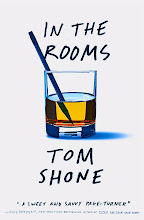
REVIEW: 'In The Rooms'

"Shone turns a sharp eye on the New York literary scene, exploring authors and alcoholism and riffing on matters ranging from what car honks mean in certain cities to the underlying floral scents of perfumes. And if Patrick's angst is a bit prolonged, it's easily forgiven in this brisk and smartly satiric first novel" — Michele Leber, Booklist

Mar 2, 2011

Screengrab: 2011 Movies

From Tinker, Tailor, Soldier, Spy; Certified Copy; Rango; Source Code; Battle: Los Angeles; White Irish Drinkers; Restless

Huckabee hearts British imperialism

"One thing that I do know is his having grown up in Kenya, his view of the Brits, for example, very different than the average American ... his perspective as growing up in Kenya with a Kenyan father and grandfather, their view of the Mau Mau Revolution in Kenya is very different than ours because he probably grew up hearing that the British are a bunch of imperialists who persecuted his grandfather."— Mike Huckabee
Huckabee is quite right. The British were not imperialist persecutors in Kenya. They were merely throwing a tea-party, a large one, to which the whole of Kenya was invited.

Feb 28, 2011

The 2011 Academy Awards: after thoughts

Commentators are falling over themselves to proclaim this the worst Oscar show ever, as is traditional, and for once they may be right. It was hard to trump last's night's jaw-aching double dose of classlessness and injustice. About the only thing good thing that can be said about it is that it served as a perfect reminder that the Oscars and quality have only the most fleeting and tangential relation to one another. I never bought the whole cahier-du-cinema-reading, finger-snapping hepcat makeover they were supposed to have enjoyed in recent years. So count me happy to limp away from a truly graceless and virtually surprise-free telecast, my identity as a filmgoer, plus my griping capacity, both renewed and replenished.
Most Viewer Hemorrhaging Event: Kirk Douglas's excrutiating hijack of the Best Supporting Actress award, his face frozen in a rictus of desperation as he clung like Grandpa Simpson to his last sliver of limelight, slurring come-ons to the "beautiful women" who were nominated. About as undignified an exit for a Hollywood screen legend as could possibly be imagined. You could feel all the younger viewers attracted by the appointment of Franco and Hathaway turning off with a collective eww.

Most Effective Decimation Of What Remained Of The Under 25 Audience: the random snatches of Hollywood history —a tribute to Gone with the Wind? — inserted into the event at irregular intervals to teach the kids some respect. Or else invoke glamor-by-association. And why did the powers that be at ABC — the one who are so desperate to attract a younger audience — also insist on turning up on stage to talk for two minutes about the recent deal they'd struck with AMPAS? Since when are 'the kids' interested in the fine print of TV scheduling deals?

Most Dismal Admission of Defeat: Bringing on Billy Crystal to remind us of the time when the presenters used to be funny and then having him reminisce about Bob Hope, who was then rescusitated with computers to do some presenting himself, thus creating an Escher-like loop of pure self-emptying hopelessness, in which presenters presented more presenters, and those presenters still more presenters, each better at their job than the one we happen to be stuck with. You know the Oscars are screwed when even the presenters get nostalgia reels. What next? The orchestra? Best speech drown-outs?

Most frequent shout-out: Christopher Nolan. "None of what I did could have been possible without the incredible vision of my master Christopher Nolan," said Wally Pfister. Does anyone who works with the guy sign a contract agreeing to call him their "master" at awards ceremonies in perpetuity? Next year will they all stand up on their seats and call him "captain, my captain"?

Best Joke: Randy Newman's admission that he's been on the show many times "and I slow it down every time."

Second Best Joke: James Franco's “I just got a text message from Charlie Sheen." Otherwise: he looked catatonic throughout, as if radioing in instructions to one of his many Franco clones from an undisclosed location. Hathaway did better once she ditched him.

Best Red Carpet Appearance: Jennifer Lawrence. You could practically feel the envy on her skin.

Most Deserved Win: Trent Reznor's. It took you a while to figure out what was so bizarre about it and then it hit you: innovative creative work, justly rewarded. Fancy. It further hemmed The King's Speech into one of the most cramped Oscar hauls in years. It's increasingly the new norm: the Mr Potato Head Oscars, with all the major awards scattered to the four winds.

Most Unseemly Gesture: the clenched spasm of victory that rippled through Tom Hooper's frame upon hearing his name called. As lonely as the air punch of a rapist.

Worst reverse innovation: the loss of the circle of praise from former winners, seemingly modelled on Krypton's council of justice in the first Superman. About the only recent innovation to actually work, so naturally it's now gone.

Most Transparent Piece of Tokenism: Halle Berry boring on about Lena Horne, the only dead person to get a personal obit on account of being black in a year when the Academy felt bad about its dearth of black nominees.

Worst Car Crash Moment: Christian Bale forgetting his wife's name.

Best Speech: Colin Firth's. Practise makes perfect. "I have a feeling my career just peaked" was a refinement of the rather too candid mid-life crisis comments he made during the Golden Globes. Similarly, with the thanks to Harvey "for taking me on when I was a mere child sensation".

Best Presenter: Sandra Bullock, bringing off a ticklish blend of tribute and teasing the producers would do well to pay close attention to, and Steven Spielberg, reminding the best picture losers of the company they keep — “If you are one of the other nine movies that don’t win, you will be in the company of The Grapes of Wrath, Citizen Kane, The Graduate, and Raging Bull”. The timeliest version of that consolation I've come across.

Feb 25, 2011

Academy Award predictions 2011

The question hanging over this year's Oscars, to paraphrase Jeffrey Wells, is whether the Academy are going to go "full fart" or not. My own feeling is that they are going to go three-quarters fart, splitting off 3 Oscars (director, editing, script) for The Social Network but keeping the lion's share for The King's Speech (film, script, actor, art dir., score). Inception cleans up in the technical categories, The Fighter mops up supporting, leaving one apiece for Black Swan, Alice, Toy Story 3, and True Grit, so the $100-million club all go home with something, while The Kids Are Alright, 127 Hours and Winter's Bone get zip. I should add — in the interests of lending my selections at least a patina of on-the-ground legitimacy — that I am writing this from the pink, decoish splendor of the Beverly Hills Hotel, where my efforts to acquire a George Hamilton-like tan are currently being thwarted by low-hanging cloud. My tin foil sun reflectors are at the ready for even a few seconds of sun. My article for The Guardian about the membership of the Academy here.
Best Film: The King's Speech
Best Director: David Fincher
Best Actor: Colin Firth
Actress: Natalie Portman
Supporting Actor: Christian Bale
Supp Actress: Melissa Leo
Best Animated Feature: Toy Story 3
Adapted Screenplay: Aaron Sorkin
Original Screenplay: David Seidler
Cinematography: True Grit
Costumes: The King's Speech
Editing: The Social Network
Make Up: The Wolfman
Sound Mixing: Inception
Sound Editing: Inception
Special Effects: Inception
Score: The King's Speech
Song: We Belong Together
Documentary Short: Strangers No More
Live-action Short: Wish 143
Foreign Language: In A Better World
Animated Short: The Gruffalo
Documentary: Inside Job

Feb 23, 2011

My one-word review of HBO's Mildred Pierce

Evan Rachel Wood as Veda in the Todd Haynes-directed HBO miniseries of Mildred Pierce, which I saw in its entirety today, and about which I am sworn to absolute secrecy except to say: *sigh*

Feb 22, 2011

REVERSIBLE TRUTHS, no. 56*

With just one week to go before the Academy Awards, the Oscar pundits — those poor boggle-eyed souls entrusted with the task of cranking out daily copy about a competition whose results can be predicted with 80% accuracy months in advance by anyone with a working grasp of English — are in the finishing straits of their annual ordeal. In a crowded field, the award for most meaningless prediction goes this year to Sasha Stone of Awards Daily who has decided that the results will be "making history one way or another."
If The King’s Speech wins, it will become the first film in 83 years of Oscar history with a British monarch as the central figure to win Best Picture. If The Social Network wins Screenplay, Editing, Directing but then loses Best Picture it will join the ranks of only two movies in Oscar history to do so.
Note the esoteric handicapping ("as the central figure") to add rarity to an otherwise entirely unremarkable fact (the Academy have always been suckers for royalty); also the lining up of those extra hoops (wins for screenplay, editing and directing no less) in order to obscure an increasingly common phenomenon (a split between best director and best film). In both cases, the analysis actually works against a helpful observation: there is rich precedent for both wins. One senses that Stone means "making history" in the same sense that Wolf Blitzer uses to the phrase, to mean merely "marking time." If David Fincher wins the Best Director oscar it will be the first time that someone with the name "David Fincher" has won, too. If Fincher does not win, on the other hand, it will be the 83rd time that someone with the name "David Fincher" has not won, but only the first time that that loss has coincided with a three-quarters crescent moon. Either way, history will be made.

* An occasional column highlighting that species of error which results when a commentator is not just wrong but so exactly wrong that were you to put their point through 180-degrees you would end up with the truth

Oh to be as blameless as Bates the valet

After an appropriately strict diet of one-episode-per-week, my wife and I finally fell off the wagon in a big way and wolfed down the last three episodes of Downton Abbey in one sitting last night, spurred on — we told ourselves — by the pure adrenaline rush of storytelling with which Julian Fellowes brought his redoubtable saga to a close. We came away from the whole thing dizzy with admiration for the Austen-like astringency of Mary; touched by the Ishiguroish exterior behind which Bates and Anna must keep their passion tamped down; but above all struck by the dexterity with which Fellowes contrives to have Bates's good name repeatedly blackened in episode after episode, only to cleanse it again with a dense weave of extenuating circumstances so extensive that Bates is compelled, if only by modesty alone, to lift not a finger to defend himself, leaving it to others to draw back the veil in an act of dramatic ex-machina vindication which reveals to all and sundry the state of pure blamelessness that forms the bedrock of his character. How strong an impression this made on both my wife and I, reminding us perhaps of the deep reserves of blamelessness that greet us when we gaze into the well of our own goodly souls, so often besmirched by the misunderstandings and outright misreadings of others, yet somehow lacking the third-act vindication on which Bates has come to rely. We try and play that role for one another of course — Anna to the other's Bates — although truth be told, neither of us is possessed of the patience to allow the process to play out in its entirety, the urge to toot our own horn, or defend our actions from the dolts and fools who would dare 'understand' us, cutting in somewhere between breakfast and the front door. We are, like most modern folk, too well defended by the deep moats of irony, the arrow slits of our own postmodern knowingness, to allow the slings and arrows of outrageous fortune much in the way of ingress. It will henceforth be a belated New Year's resolution to allow a much deeper mountain of false charges to accumulate at my door before brushing them to one side, taking care in turn not to incriminate my accusers, but allowing a blush to creep up their cheeks of its own accord, and placing all my faith in the same Jeevesian benificence that rules the roost and keeps the fates in balance at Downton Abbey.

Feb 21, 2011

Such stuff as dreams are made on

“Anna Nicole,” by the British composer Mark-Anthony Turnage and the British librettist Richard Thomas, finally had its premiere here at the Royal Opera on Thursday night before a sold-out house with standees everywhere. And it proved a weirdly inspired work, an engrossing, outrageous, entertaining and, ultimately, deeply moving new opera... Turnage and Thomas have given us a tragic operatic heroine, a downtrodden nobody determined to make it, to “rape the American dream,” as she puts it, any way she can. Their Anna Nicole is in the lineage of Bizet’s Carmen, Berg’s Lulu and the Weill-Brecht Jenny... There are flashes of Weill in the clattering cabaretlike scenes in which the reporters, wielding microphones, mutter like a Greek chorus; and jazzy sneering brass writing in the scene with the dancers at the “gentlemen’s club” in Houston... “Anna Nicole” can probably claim to be breaking new ground in the scene in which Anna Nicole receives breast-implant surgery from the fast-talking Doctor Yes (a vibrant Andrew Rees). ... a musically rich, audacious and inexplicably poignant work." — New York Times
Nobody could be happier than I at this show's success. I thought Nicole Smith was hideously treated by the old gentlemen of the press, all of them elbowing and kicking to be first in line to first oggle her and then call her "famous for being famous." Is there a more bonehead phrase? It's got all the sound of sense, while making none. It's only ever applied to women whose lascivious hold on the writer must be avenged in the form of cheap insult dressed up as analysis: "famous for being famous" is another way of saying "bimbo" for those too frightened of being called sexist. Like many who attract the label, Nicole-Smith was famous for perfectly explicable reasons. She was famous for her great beauty, as first showcased in a series of adverts for Guess jeans which made great play of her Vargas-blonde looks and retrofitted chassis, harkening as both did to the great bombshell era of the 1950s. Anyone who doesn't understand why great beauty, allied to nostalgia for America's greatest decade, wouldn't make someone famous need to go back to grad school and reread Daniel Boorstein's The Image. The spectre of undeserved fame is only ever invoked by people who don't understand what fame is. 'Famous just for being famous' describes everyone in the public spotlight, inertia being one of fame's principle properties. All fame is undeserved, in the sense that it bears no intrinsic relation to the reasons for that fame. The people who recognise Albert Einstein's image no more understand relativity theory than the people who recognise Anna Nicole-Smith's image can intuit from it the history of Guess jeans. Einstein's fame is not worth more than hers. His achievements may be, but his fame is worth exactly the same. It's the same substance — the same dumb stuff. Now, some lecherous old newspaperman may wish to diss his own lust and judge theoretical science a more worthy cause than great beauty — not my priorities, you understand, although I hear tell of such people — then so be it, but if Nicole-Smith is "famous for being famous" but then so too is Einstein. That old bimbo, Albie Einstein.

Casting doubt on true Beliebers

The dust plumes in the Middle-East still settling, commentators of this side of the Atlantic have all started asking themselves: could it happen here? Which dictator is most vulnerable? Obama? Palin? Limbaugh? Beck? Maybe you think those trivial examples, a cheapening the very notion of dictatorship — conceptual decadence from the pundit class. In which case, The New York Times has news for you: from precisely such complacency are tyrants bred. Anyone who thinks the United States cannot succumb to the mesmerising flame of fascism need only remind themselves of the latest terrifying mass movement to sweep the nation: "everywhere, a screaming and devoted army, more emotive and compelling than the object of their affection", a tyrant who "holds sway over a certain cross-section of young women... like a cult leader, he rules largely through suggestion and iconography, not direct command." Who is this child emperor? This glazed Hitlerite? Why, Justin Bieber, of course, plotting world domination behind his fringe, according to Jon Caramanica, his tenebrous reach all too apparent
during the Grammys, when Mr. Bieber lost the award for Best New Artist to the relatively unknown jazz musician Esperanza Spalding. Within minutes, her Wikipedia page was crudely defaced, presumably by the viral swarm of Mr. Bieber’s young, Internet-savvy fans, clamoring to defend his honor. It’s not the first time the Beliebers have lashed out in defense of their idol. The last year has seen several outbursts of rage from Beliebers against enemies of the state, be they YouTube users deemed insufficiently respectful of the king, or Kim Kardashian, who claimed on Twitter that she received “death threats” from Mr. Bieber’s jealous fans after being seen with him in public.
You look in vain for some sign of irony to Caramanica's comparison of Bieber fans to totalitarian death squads. Caramanica clearly doesn't much care for Bieber's music, which he brushes aside with the same sniffy pop-sociology once visited on the Beatles:—
"What has Mr. Bieber done for these fans apart from inspire crushes? Does his music speak to their needs and interests as young girls? Is he someone who, a few years from now when they (and he) are all grown up, will appear in retrospect to have been a suitable receptacle of their adulation."
Seriously? Are we really going to do this all over again — the whole you-can't-hear-the-music-for-the-screaming thing? The answer to the first question is "record good pop records," the answer to the second is "yes," and the third shouldn't be answered by anyone serious about their music. Nobody decided whether to buy I Wanna Hold Your Hand by considering whether the Beatles "might appear in retrospect to have been a suitable recepticle for their adulation". (Could the broom be any further up the ass of that phrase?) They bought the record because it sounded like nothing they had heard before. The fact that it was something they could listen to in five years time was a nice bonus, but even if the record had turned out to be a source of lifelong excrutiation for Beatles fans, that, too, is the peculiar power of pop music, which pins you to the present with such power that listening to it many years later can bring a blush to the cheek — like leafing through an old diary. Of course some of Bieber's music is going to embarrass some of his fans in years to come: that's the point. And some of it may do a lot better than that: he has a sculptural grasp of melody, and gifts of phrasing — for divining a path for his voice through a song — as surefooted as Mariah Carey's. U Smile needn't bow to anyone. It doesn't suit Caramanica's purpose to get into a discussion of the merits or demerits of Bieber's music, though. The bulk of the article turns out to be the ill-advised comments on abortion that Bieber recently gave to Rolling Stone.
“I really don’t believe in abortion,” he said. “I think [an embryo] is a human. It’s like killing a baby.” The reporter pushed him, asking if that held true in cases of rape. “Well, I think that’s just really sad, but everything happens for a reason. I don’t know how that would be a reason.” Looking “confused,” in the word of the reporter, he added, “I guess I haven’t been in that position, so I wouldn’t be able to judge that.”

Carmanica adjudicates thusly,

Even if Mr. Bieber is heartfelt in his opposition to abortion (and there’s no reason to think he isn’t), his reply wasn’t the clearest or most sophisticated distillation of that position... like most kids, he no doubt wants to be treated like an adult. That means no minder on hand, presumably, when being asked these questions. He’s treated like an adult in other ways, too. Take the Rolling Stone cover photo, a rough-trade-style shot by the provocateur photographer Terry Richardson — or the recent tabloid photos of him kissing the Disney star Selena Gomez while on vacation in the Caribbean... as Mr. Bieber fills out as a man, he may or may not inspire the devotion that Justin Bieber the boy is capable of generating.

Caramanica isn't buying, but note what he isn't buying: his own crappy goods. First he sidelines the music, so he can accuse Bieber of being more than a musician, then projects onto him a set of aspirations ("he no doubt wants to be treated like an adult") so as to to crunch them cruelly underfoot ("his reply wasn’t the clearest or most sophisticated distillation of that position.") Actually I found Bieber's answer both perfectly clear and admirably nuanced: he is anti abortion but when it comes to rape, concedes that "I haven’t been in that position, so I wouldn’t be able to judge that.” That seems to be about as evolved and compassionate a pro-life attitude as one could hope for. His only mistake was to make his views public, if only because it allows columnists like Caramanica the chance to execute the old commentator switcheroo — accuse a subject of a sententiousness that you have just planted yourself.