Nov 5, 2012

OSCAR FUTURES: Best Actor


The first of my Oscar columns for The Guardian:—
'The race is on. The polls are in. We have a frontrunner in trouble. A muscular challenger making hay. Gaffes. Melt-downs. Campaign coffers swollen with cash. The only question is: can the voters learn to love a sandcastle humper? I refer, of course, to the race for the Academy Award for Best Actor. You didn’t know it was already underway? Where have you been? You’ve got better elections to be obsessing over?  
While everyone’s attention was diverted by the small matter of who gets to lead the free world, Hollywood has begun the 5-month-long jamboree that now constitutes the run-up to the Academy Awards. Here’s what you need to know.  Everyone has decided Jennifer Lawrence is going to win Best Actress. Joaquin Phoenix was the front-runner for Best Actor until a few weeks ago, when he called the Oscars “bullshit.”  Then everyone went into a Twitter-induced freak-out over Daniel Day Lewis’ accent, as revealed in the Lincoln trailer. Everyone loves Alan Arkin. Oh, and Argo is going to win Best Picture. Roger Ebert says so.  
Such anyway is the received wisdom of the Oscarologists, that strange mole-like race of people who live underground for most of the year, emerge blinking out of the ground in early September to  attend film festivals, pore over trailers and teasers, sift the soil through their fingers, sniff the air and type things like “I smell trouble” on their blogs. Here is how the race for Best Picture looks  to them, as of last week. 

 
The keen-eyed amongst you will notice two things: 1) Silver Linings Playbook’s spell as frontrunner bore a suspicious resemblance to “the length of time it was playing at film festivals.” And 2) Argo’s turn in the spotlight bears a suspicious resemblance to “the number of weeks it has been in general release.”  Those of you who object to this graph on the grounds that Silver Linings Playbook hasn't been released yet, and furthermore you have zero idea what it even is, need to toughen up. Awards season is not for pussies. By the end of it, well have you calling next year’s race, blind, on the basis of which agent got the biggest shout-out at this year’s ceremony. 
The tracks of the Best Actor race are roughly set. This year it looks like a three way race between Joaquin Phoenix, Denzel Washington and Daniel Day Lewis. Thus far, Phoenix has been dominating the conversation with his electrifying jumble of method voodoo and chemically-induced jibber-jabber in The Master, although he damaged his chances considerably by giving an interview in which he called the Oscars “bullshit. I think it’s total, utter bullshit, and I don’t want to be a part of it. I don’t believe in it.”  Actors have gotten away with this sort of thing in the past — Dustin Hoffman called the Academy Awards “a beauty contest", while George C. Scott, nominated in 1970 for "Patton," called the ceremonies “a two-hour meat parade” but that was then. Such comments don’t go sit well in the world of $15 million Oscar campaigns. 
And the performance? Phoenix’s portrait of a man in a state of acute spiritual undress is right up the Academy’s street. They certainly like their meat gamey: see Halle Berry’s win in 2000 for Monster’s Ball, or Natalie Portman’s 2010 win for Black Swan. Although it’s also a curiously opaque, depthless performance, raising more questions about the intentions of the director Paul Thomas Anderson than it does Phoenix’s character. As Richard Brody put it, “It’s not a work of psychological realism,”  one reason, perhaps, why the film has failed to catch on the box office. Is it too nuts even for the Academy?  As one of the commentators at Hollywood Elsewhere put it, referring to a scene in which Phoenix makes out with a beach, Oscar doesn't generally go for sandcastle humping.”This could well turn out to be the question of the season. 

Well, do they or don’t they? Phoenix’s main competition couldn’t be more dignified or draped in gravitas  — and twice decorated already. Given his track record at bringing American period to life, I wasn’t sure Daniel Day Lewis was going to find much fresh turf in Spielberg’s Lincoln — between his Hawkeye, Bill the Butcher and Daniel Plainview, haven’t we already seen his Abraham Lincoln? — but  Day Lewis tacks in the complete opposite direction to come up with a soft miracle: stoop-shouldered, spindly of frame, his Abe Lincoln is slightly weary, sagacious soul, but ramrod straight, driving the entire 2-hour-and-twnety-minutes of Spielberg’s epic as surely as an ox.  Ordinarily I would say: no contest. One of our greatest screen actors, playing one of America’s greatest presidents. No humped sandcastles, just nations rebuilt with blood, sweat and oratory. Call it a night and go home early. The only question hanging over the performance is whether the Academy are quite ready to usher Day-Lewis into the hallowed company of three-time winners that also includes the likes of Hepburn, Streep and Nicholson. Put it like that, and the prospect seems irresistible. The academy are whores for “greatness” and love to make their own history. Or would they prefer to bestow that honor on Denzel Washington?

He’s landed one of the meatiest roles of his career in Robert Zemeckis’s Flight (released last week), playing Whip Whitacker, the substance abusing pilot who lands a malfunctioning plane while high as a kite. (My review here).  It’s by far the best star performance of the year, which is not to downplay it. As David Edelstein said of Washington:—
"He’s not an actor who opens himself up—you never quite feel you know him, underneath. But that’s why his onscreen explorations of control and its opposite feel so right, so true to who he is as a performer and a man. When you watch Joaquin Phoenix in The Master, you see the Method at its most perilous and wobbly: You see an actor who has lost control as an actor and with it the ability to shape his performance. Phoenix is vivid but he’s all over the place: If he played Whip, he’d be dissolving in the first shot, randomly zigging and zagging in the ether. But Washington takes Whip to another level. Despite the script’s overfamiliar beats (yes, there are twelve-step meetings), he anatomizes Whip’s existential seesaw. He breaks Whip’s—and his own—cool into pieces, the good and the bad, the supremely potent and pathetically impotent. This is a titanic performance."
My own feeling is that it’s too good for the Oscars. Like Brad Pitt’s performance in Moneyball last year, Washington’s work in Flight has the kind of sanded ergonomic beauty that sails right past the grimacing and gurning required by the Academy to reassure them they are in the presence of “great acting.” Washington’s major impact on this year’s race could be to draw enough votes away from Day-Lewis to allow Phoenix to slip through — but right now, it feels like Day-Lewis’s to lose.'

Nov 4, 2012

Obama 2: The Sequel

From my Guardian column this week:—
'...The first act of what followed was terrific, even if the genre was slightly unexpected, given the historical circumstances: comedy. Whether riffing on the White House as the perfect “home office”, or goofily wide-eyed with his first flight on Air Force One, or sparring with McCain over the budget for a new fleet of presidential helicopters (“The helicopter I have now seems perfectly adequate to me”), Obama seemed to be channeling every ordinary Joe thrust into a fictional Oval office, from Jimmy Stewart in Mr Smith Goes to Washington to Kevin Kline in Dave. As Jon Stewart quipped, upon hearing the news that Obama had gotten Earth Wind and Fire to play at a White House party, “Obama is actually doing the thing everyone says they would if they became president. ‘If I become president I’m going have my favorite band play, and they’re gonna play in the living room, like every day?” Then came the mid-terms. Traditionally the Second Act Complication brings the villain into play but in truth the Republican Freshmen who took up their position in congress were not your typical not Vaudevillian villains, twirling their moustaches. Rather, with an obstructionist agenda that came close at times to outright nihilism, they were less, they more closely resembled Brechtian saboteurs, intent on breaking the fourth wall, bringing the entire performance to a shattering silence in which the audience looks at one another, nervily: what now?  
If the Clinton movie was baby-boomer nostalgia trip which descended into gluey sexual farce (The Big Chill meets Nine to Five) and the Bush presidency, like the second installment of all long-running franchises, a terrifying lurch over to the dark side (Superman 2, The Empire Strikes Back, Indiana Jones and the Temple of Doom), then Obama’s presidency soon resembled something out of the Theatre of the absurd: an Beckettian anti-drama in which no is yes and up is down, designed to send the audience staggering out into the night, having been forcibly divested of their petit-beorgois assumption that this or any drama should ever make sense. Anyone for a sequel?The biggest obstacle to a second Obama term, as with all sequels, is the removal of the asymmetry which made the hero’s struggle so diverting in the first place. David has become his own Goliath. The kid who took on the Death Star is now a Jedi knight spouting Chinese-cracker bromides, and to be frank Princess Leia always preferred Han Solo anyway. “You know, I recognize that times have changed since I first spoke to this convention,”   said Obama when he accepted the Democratic nomination earlier this year. “Times have changed, and so have I. I'm no longer just a candidate. I'm the president.” Some commentators took this for an Aaron Sorkin moment, akin to Michael Douglas’s alpha-dog assertion of rank in The American President (“My name is Andrew Shepherd, and I am the President”), but he put the emphasis on a different syllable, sounding a more rueful note. Obama sounded like a man who knows his magic has partly evaporated, not as a consequence of anything he has said or done, but simply because he has ceased to be a projection of our desires. He has ceased to be fictional, and become real in front of our eyes.'

Long shots I have loved

A handful of directors recently seem to have rediscovered the joys of the long shot, particularly when deployed, coolly, in the heat of the action. Here are a few that have given me a thrill.
—the streaking jet in Robert Zemeckis's Flight
— the shot of the bridges detonating in The Dark Knight Rises
— the exploding building in Skyfall
— the explosion behind Downey's turned back in the first Iron Man
And some golden oldies:—
— the parking lot killing in Jackie Brown
— the night-time shot of the ship, tiny in the frame, in Titanic
— the car, the police shot, the horn, in Chinatown
— Mike Myers sitting up in Halloween
— Dustin Hoffman 'running in place' in The Graduate
— advancing Omar Sharif in Lawrence of Arabia

Nov 1, 2012

Roland Emmerich was only half-right

“Roland Emmerich was right,” said one screenwriter who had rung me up me excitedly to see whether my area in Brooklyn was underwater or not. She had in mind Emmerich’s 2004 disaster movie, The Day After Tomorrow, which consumed New York with a giant tidal wave, although we soon fell to swapping other cine-antecedents:  1998’s Deep Impact, 1933’s Deluge, and Spielberg’s A.I. with its visions of a sunken Coney Island, underwater skyscrapers, and a statue of liberty submerged but for its torch, now become the perch for seagulls.  
Such is the fate of New York, that when disaster strikes our first thought goes to the movies, so repeated has the city been devastated over the years, whether by tidal wave (Deep Impact), zombie plague (I Am Legend) asteroid  (Armageddon), alien (Independence day), or ape (Planet of the Apes). It is the apocalyptic city par excellence. “What a ruin it will make!” H. G. Wells exclaimed, upon catching sight of the New York skyline, which formed one of many indelible images from Monday night — not entirely blacked out, but partially, from 39th street and below, which meant that unlike the blackouts of 2003 and 1977, we got to see it at night, the buildings of Greenwich Village just visible in silhouette against the lights further uptown. 
The citizen in me was horrified, but I’d be lying if I said that the connoisseur of apocalypse — and since 9/11 all New Yorkers have been experts in that field — wasn’t awed and fascinated at this fresh evidence of what happens to the city in extremis —  what Andrew Sullivan has termed “ruin porn.”  Everyone compared 9/11 to a disaster flick but   Hollywood would have made the fireballs the jets made when they hit the side of the world trade centre much bigger; and scattered the debris much wider. It was, curiously, the modesty of the image that terrified: seeing that a jet makes this sized fireball when it hits a building, and casts no debris at all, instead vaporizing on contact. 

Something similar applied on Monday. What we saw was both less than and more than the hyperbolized destruction of the movies —  not Emmerich’s tidal waves, or Spielberg’s underwater skyscrapers, but the half-submerged streets of Hoboken; cars floating down the street like flotsam against a grate;  the beaches of New Jersey, relocated to the street; shuttered subways, and a rising tide of briny water. Roland Emmerich was only half right. As Vulture noted:— 
"No matter how often the eggheads told us to watch for the storm surge, not falling skies, we still expected Death From Above — because that’s the apocalypse we’re best rehearsed for, from Independence Day to The Avengers. The actual onslaught turned out to be far more insidious, less visible, with few celluloid precedents: a bubbling-up from below, a slow submerging of our vulnerable undercarriage and the corrosion of our centuries-old subterranean infrastructure. Sandy wasn’t the cataclysm we’d been trailered; it was more slow-acting snakebite than one-punch obliteration. It could color our future shared nightmares of Big Apple Armageddon, a sector of splashy pessimism that has, for the last decade, been dominated by The Obvious."
Because Sandy made landfall in the evening, most of us woke up to find out what had happened, the storm having moved on, leaving behind images whose stillness more closely resembled the eerie landcapes of fiction, rather than the movies.  I was reminded in particular of   J G Ballard’s The DrownedWorld, in which the polar icecaps have melted turning Europe is "a system of giant lagoons" and the American Midwest into "an enormous gulf opening into the Hudson Bay.” More recently, we have had Kim Robinson’s Forty Signs of Rain (2005) in which rising sea levels have turned America’s cities into versions of Venice:— 
“A city floored with water. Here it was quite shallow, of course. But the front steps of all the buildings came down into an expanse of brown water, and the water was all at one level, as with any other lake or sea. Brown-blue, blue-brown, brown-gray, brown, gray, dirty white – drab urban tints all. The rain pocked it into an infinity of rings and bounding droplets, and gusts of wind tore cats’ paws.” 
The comparison with old Europe is telling. For New York has taken up the position in the popular imagination that used to be occupied by London, which, in the years leading up to 1916, was subjected to repeated fictional apocalypse, in pulp novels gripped by pre-war jitters. Great wars that devastated civilizations were fought in the skies and on imaginary battlefields dwarfing those of Verdun and Stalingrad,” writes literary historian W Warren Wagar. “ Fascist dictatorships led to a new Dark Age, class and race struggles plunged civilization into Neolithic savagery, terrorists armed with super-weapons menaced Global peace. Floods, volcanic eruptions, plagues, epochs of ice, colliding comets, exploding or cooling suns, and alien invaders laid waste to the world.” Sounds like a movie pitch.

Oct 28, 2012

A work of misunderstood genius

"Warner Bros. could have bragging rights with the top two films this weekend (based on Friday's grosses), but the reality is they can't be too happy with the poor performance of "Cloud Atlas." The Wachowski siblings/Tom Tykwer collaboration actually came in #3 for the day (just under $3.5 million). But with weak reviews (Metacritic score 54), an audience response of C+ on Cinemascore and a reported $100 million budget, this looks like it is headed for cult status rather than hit...." 
I give it ten seconds before some critic decides that poor box-office is the authentic stamp of misunderstood genius... my money's on Brody... possibly Thomson.... wait... this just in... Andrew O'Hehir on its "dazzling tapestry".  

Oct 27, 2012

Is film dying or just coming down with a nasty cough?

'...Thomson's one caveat is the result of having actually enjoyed a few “humane pictures made modestly on absorbing stories with a feeling for fictional lives that can be overwhelming”, including Winter’s Bone, The Arbor , A Prophet, and   InceptionIs Thomson aware that all four of those films were released in a single time year? Four! If I can count two or three humane, overwhelming movies in any one year, I count myself a lucky man. I am, of course, one of those attention-addled jarheads reared on Jaws and Star Wars who Denby and Thomson fear most, my expectations systematically lowered by a succession of THX-stereo laser blasts to the side of the head. But even Thomson, compiling his golden age list for the 30 and 40s — His Girl Friday, The Lady EveThe Grapes of Wrath,  The Ox-bow Incident,  Meet Me in St. Louis, Casablanca,  To Have and Have Not, Citizen Kane, Laura, Double Indemnity, The Best Years of Our Lives —  is entirely satisfied with a strike rate of only one great film every two years. So if one great film every two years makes for a ‘golden age’, what kind of funeral do four “humane, overwhelming” films every year make?  Can we have a rule that if you need most of the fingers of one hand to count the number of films whose virtues briefly dispel the funereal gloom like a Vermeer candle lighting up the valley of the shadow of death, then strictly speaking you oughtn’t be talking about the death of film at all? Strictly speaking, the number of films you will find chasing away the blues every year ought to be “zero.” Maybe one or two, if you think cinema is not quite at deaths door yet, but four?' — from my Guardian column this week  

Oct 22, 2012

SO GLAD I DON'T HAVE TO SEE: Cloud Atlas


'In the mid-nineteenth century, on a voyage through the Pacific Islands, a young American (Jim Sturgess) falls afoul of a scheming doctor (Tom Hanks) but is saved by the efforts of a stowaway slave (David Gyasi). In the nineteen-thirties, an English youth (Ben Whishaw), on a musical quest, is hired as an amanuensis to a crotchety composer (Jim Broadbent). Almost forty years later, in San Francisco, an investigative reporter (Halle Berry), tipped off by an elderly scientist, uncovers the truth about a nuclear power plant and tumbles into danger as a result. In the present day, an unscrupulous London publisher (Broadbent) is confined to an old-people’s home by his brother (Grant). In Neo-Seoul, a glittering Asian city of 2144, a female fabricant (Doona Bae)—cloned to work in the food industry—rises up against the system that bred her. And last, in an age to come—“106 winters after the Fall”—the members of a forest tribe, surviving in primitive conditions, are visited by their streamlined superiors, who zip across the ocean in a kind of aqua-spacecraft... We hop from the farcical whimsy of old folks, as they bust out of the retirement home, to the severe and glittering saga of Neo-Seoul, which is constructed as an Orwellian satire on corporate conformism, but which—as with the Wachowskis’ work on the “Matrix” franchise—becomes laughably oppressive in its insistence that every character must, under all circumstances, retain a poker face... The directors are quite earnest about the appearance and reappearance of their various stars, inviting us to have genuine faith in the blah of eternal recurrence, and there is something grindingly circular in a film that exerts immense—and, to be fair, often spectacular—energy to connect human beings across space and time, only to conclude with the startling news that we are all connected. This takes its toll on the performers. In the musical section, Ben Whishaw somehow conspires with the ever-reliable Broadbent, amid the cacophony of the narrative, to find a welcome stillness and poise, yet even the two of them must bow before the movie’s grand design, and proclaim its raison d’être: one speaks to the other of “meeting again and again in different lives, and in different ages.”' — Anthony Lane, The New Yorker
This column has been a bit quite of late, but I can't in all honesty remember a movie who's failure to be seen by me will give me quite as much pleasure — or enrich my life — as Cloud Atlas will.  It's almost too easy. Everything about this screams "stay away, Tom" at the top of its lungs: the portmanteau form, the panto costuming, the connection message, the presence of Halle Berry. Any one of these things, in isolation, would be enough to send me hurtling in the opposite direction, my legs a blur, but together in one package like this, it's almost a waste of perfectly decent, stand-alone deal-breakers. I could be not seeing half a dozen movies on the basis of any of them, if only the Wachowskis had been a little more generous and spread them around a bit. Putting them all in one movie makes the whole game too easy, somehow.

Oct 16, 2012

REVIEW: Flight (dir. Zemeckis)


When we first meet Whip Whitacker (Denzel Washington) in Robert Zemeckis’s Flight, he is pulling himself from the wreckage of a hotel room decorated with minibar bottles, cigarettes butts and the underwear of the flight attendant lying next to him. This being a work-day, Whip perks himself up with a line of cocaine, dons his captain’s uniform, strolls down the walkway and straps himself into the cockpit of the passenger jet he is flying out of Orlando that day, bound for Atlanta. Things get a little bumpy along the way: his tail-plane snaps, sending the plane into a nosedive, but Whip, by the same law which allows drunken sailors to walk in straight line on a keeling ship, manages to crash-land the plane, losing only 6 lives in the process. He flies upside down for part of the journey, but still. This is Denzel Washington we’re talking here. Guy could find his centre of gravity in a black hole.   
The landing itself is as rivet-loosening as you might expect of the director who put us through a similar nosedive in Castaway. I knew Zemeckis had out-done himself when, in a touching moment of sympathy for the air stewardess on screen, I saw an entire row of heads all leaning hard left. Having flayed our nerves, he then sets us down for  — well, for what exactly? As a toxicology report came to light with blood-alcohol counts that would put down a buffalo, I readied myself for a courtroom drama, complete with hammered gavels and surprise character witnesses. But the airline kills the toxicology report easily enough, and Whip holes up in a dilapidated farmhouse with a stack of bourbon bottles: ah, an alcoholism case study and one man’s battle to tell the truth. Then the TV crews start crowding Whip’s lawn, at which point I finally put a tick next to “Gumpian Demystification of the American Hero in the Age of Cable News.”    
The film is a little of all of the above, which perhaps explains the 2-hour-20-minute running time. I could have done with the christianists and crazies, with their God-talk and chatter about the webbings of fate — a favorite Zemeckis theme, although he made the same point much better with a DeLorean in Back to the Future. His early films were cackling entertainments that moved too fast for you to notice the blackness of their humor — like a hi-tech Preston Sturges. That’s what made Forrest Gump so hard to bear: half of that movie was a comic-absurdist take on American history as retold by an idiot not too far from Kurt Vonnegut’s heart. But then Zemeckis fell in love with his idiot, swept the Oscars and that was that. After a decade spent tooling around with cold marvels like The Polar Express and A Christmas Carol, Zemeckis’s return to life-action filmmaking is being hailed as The Kind of Adult Drama They Don't Make Anymore. 
Flight is both more entertaining and  more cunning than that, its black humor buoyed by punchy Rolling Stones tracks and an ebullient cameo from John Goodman. Next to Gump, the film has the moral force of a George Steiner essay, but what lends it that force are not the carefully calibrated moral ambiguities of the script, but the bruised, defiant soul that appears to us in the form of Denzel Washington. He’s barely off-screen. Flight is a star vehicle, rolled and inverted just like that plane, but then Washington is probably the only star of his stature capable of flipping our expectations on their back without a wink to reassure us that it’s really him. This is probably his meatiest role since Training Day and he bites down deep. From Whip’s cool amidst the chaos of that cockpit, to his darting glance when the word “toxicology” first comes up, Washington gives us all this man’s cocksurety, his selfishness, his belligerence, and flashes of panic, safe in the knowledge that he has only to walk down a corridor using that patented Washington roll — as if he ran on lubricated ball bearings — and we will be with him, every step of the way. B+
 — my review in The Guardian 

Oct 14, 2012

Oct 6, 2012

REVIEW: Amour (dir. Haneke)

Ahead of seeing Amour, I'd heard all kinds of warnings to the effect that it was hard-going, punishing, the kind of film one tackles only after a two-week bootcamp of Bergman and Tarkovsky to achieve a zen like mastery over one's infantilized demands for "entertainment". What piffle. The film is astounding by any measure. For the first hour, my physiological reactions were exactly those of someone watching a first-rate thriller, maybe one of those Hitchcocks confined to a single apartment like Rear Window or Rope. We have a dead body. The police. News of a break-in. Then a physical assualt that leaves an elderly woman incapacitated and news of an even bigger one coming.  That the assailant is Death makes no different to the verve with which Haneke baits his narrative. “It will go steadily downhill for a while and then it’ll be over,” says Georges (Jean-Louis Trintignant). There's even a shower-scene, much worse in its way than that in Psycho, with a naked Emmanuelle Riva, calling for her mere at 85 while she is washed by a nurse, her rump spreading unceremoniously on the porcelain. It's not the first time that Haneke has sought to flay our senses with all the shocks the flesh is heir to, but it is the first time he hasn't left us hanging, instead redirecting us towards the immense love in Trintignant's face, peering anxiously into Viera's, or the awkward, intimate waltz they perform every day, as he inches her wheelchair to bed and and back. As human portraiture Amour is unassailable. If we are to treat filmmakers as Gods, they must keep up their end of the bargain and balance the torment and tenderness they dole out. Anything less and the illusion is gone in an instant, the director stands revealed as just another false prophet, usurper, or petty tyrant. Haneke has at times come close to this, and I certainly appreciate why he broke the fourth wall in Funny Games — to acknowledge his own thumb on the scale — although  his brutality has never given off the true musk of a brute, but the opposite: an acute over-sensitivity that feels every slight or act of cruelty as a mortal blow. It's no less open to the charge of disproportion, of course, which is why the invisibility he achieves here is so remarkable. There are two visitors to the Laurent's apartment who are not family: a former pupil of Anna's, now a successful pianist, who visits them while she is still able to speak, but confined to a wheelchair, and who sends them a note afterwards, thanking them for the "sad, beautiful moment" they shared with him; and a neighbour who praises Georges for how he is dealing with his dying wife. "Hat's off to you," he says. In both cases, Haneke catches a feeling that had been running through us, the audience, and rather than chastise us for it — these visitors, after all, mean well — he simply puts it up on screen, allowing us to move to one side and push past our notions about the "bravery" or "beauty" of a dying spouse, into uncharted territory. Something close to the end of  Cries and Whispers maybe, my favorite Bergman film if only because Bergman's optimism and pessimism seem held in such perfect balance. Haneke has achieved something similar in this lovely, transfixing, strangely calming film. A

OSCAR FUTURES: Life of Pi

The first of my 'Oscar Futures' for The Guardian:—
Despite ecstatic reviews from critics at the New York Film Festival this week, The Life of Pi has met with a curiously grudging response from the assembled ranks of Oscarologists and awards-season prognosticators.  “I think that Life of Pi is going to be regarded as a major visual feast by the visual-delight-for-the-sake-of-visual-delight crowd,”said Jeffrey Wells, of Hollywood Elsewhere, but “as a non-starter by a significant portion of the family audience … and as a respectable also-ran in the Best Picture contest.” The Hollywood Reporter’s Scott Feinberg found it “impeccably crafted” but, “while it looks to be a strong below-the-line contender, I'm not sure that I see it contending strongly in the higher-profile categories.” Fresh from that screening, Indiewire’s Eric Kohn tweeted " Pi seems destined for the Hugo slot: F/X-driven, sentimentally involving, respected director." Wake up people! The Life of Pi is not just a strong contender to make the list of nominees for Best Picture but one of the few films that has the potential to go all the way. Here’s why. 
 —The 3-D phenomenon has been dying to crown a King. Ever since Avatar started the 3-D renaissance in 2009, Hollywood has been waiting for someone to enter latest cash cow in a dressage competition. You remember how far Avatar got in the race, only to be felled at the last minute by actors voting bloc, not so much because that they wanted to give acting gongs to The Hurt Locker (they didn't), but because Avatar was perceived to be about cartoon blue people. Last year, too, they showered Hugo with nominations but Scorsese’s film, for all its marvel, was a decidedly cold fish to anyone but cinephiles and silent film buffs. “Too good for kids,” was one verdict, which pretty much summed up why it failed at the box office. Magical where Hugo was mechanical, Life of Pi comes warmed by Lee’s characteristic empathy, tact and sonar-like ability to sound out hidden emotion. The tiger really wants to eat the boy for most of the film: seeing how they broker a peace, without cheating or recourse to anthropomorphism, is the genuine miracle nestled amidst it’s special effects. 
 —It offers Hollywood a flattering image of itself. A vitally important prerequisite for the Best Picture winner (and the reason, incidentally, why it will never be a Quentin Tarantino film).  For 364 days of the year Hollywood grazes elbows and shins in the mad scramble to put bums on seats, and them, on one day, it puts on a tux and rwards itself for the innovative, artistically daring films it has spent the last year trying not to make. That day is known as the Oscars. Right now, the dominant genre in Hollywood  is the “four-quadrant” family film with all the technological trimmings. In other words: kid’s movies, like this year’s Brave, Ice Age: Continental Drift, Madagascar 3, and Dr Seuss the Lorax. Even more than traditional action blockbusters, which play mostly to teenage males, the animated family film is the industry’s lifeline, right now — the thing stopping it from sliding into the Pacific ocean. For this, Hollywood is both grateful and guilty. Not many producers, when they started out, saw themselves going in the baby-sitting business. Reared on Godard and the Hollywood New Wave, they still see themselves as iconoclasts, and delight at the prospect of revolution — as long as it plays. Life of Pi squares that circle. It lends A-list auterist respectability to the main business of Hollywood right now. It brings redemption to an industry hell-bent on remaking The Smurfs. 
 —It offers a bridge between past and future. The ageing members of Academy are a backward-looking lot. They love films that evoke Hollywood’s past, like The Artist of The King’s Speech. At the same time, they are obsessed with tomorrow’s tracking numbers and fret endlessly about the future. They see all this technological change going on around them — digital paint-boxes, motion capture, motion control — and they want to reward all the effort and artistry, but how can they when what they are looking at, at the end of the day, is a film about blue people, or monkeys taking over San Fransisco. With its Booker-winning literary pedigree and roots in Aesopean fable, Life of Pi offers a reassuring bridge between all this technological whiz-bangery and the kind of classic Hollywood storytelling that gave us The Wizard of Oz or The Jungle Book. . A vote for Ang Lee’s film is thus more than just a vote for Ang Lee, it is a vote for all those Pixar movies that never quite made Best Picture, or all those Andy Serkis performances that never found a nomination. This time, all the technology has at its back a Big Theme. 
 — It is “about” something. The film celebrates many world religions — Buddhists, Christians, Muslims, Hindus — but the casual inclusion of Muslims in that list will play particularly well in Hollywood.  Critics will doubtless complain  about the slightly saccharine nature of the film’s pantheism, and the redundancy of its frame, in which the narrator chews over the spiritual overtones of his tale. But megaphoning your theme — particularly one as hefty as religious tolerance — never hurt a film’s chances. On the contrary, this is a great example of the kind of misunderstanding between critics and Academy members that leads to shock on Oscar night. 
 — Hollywood’s growing internationalism. At no point in its history, save perhaps the silent era, has Hollywood been more international in scope than it is right now, taking over 70% of its profits overseas. That is an industry-changing statistic. And you can see that change at the academy Awards over the last few years. Think of the 2007’s win for Slumdog Millionaire, a British-Indian-American co-production, or The King’s Speech, a British film, or last year winner from France, The Artist. “I'm not American and I'm not French, actually,” Michel Haznavicious told the DGA when he accepted his directing award. “I'm a filmmaker.” Lee has a greater claim as anyone to be at the forefront of this group of global filmmakers, which also includes Danny Boyle and James Cameron, who are evolving an international movie grammar for a global audience. Lee’s 2000 film, Crouching Tiger, Hidden Dragon was pretty much the prototype. This not an argument for why anyone will vote for him, merely to point out that he may be on the right side of history. 
 — The academy owes him. After the monumental snub administered to Brokeback Mountain in 2006, when the Academy gave best picture at the last minute to Crash, Lee has been in possession of one of the largest Oscar IOUs since Goodfellas was beaten by Dances with Wolves in 1990. It’s worth noting that Lee did gest Best Director for Brokeback, but Life of Pi is a visual stunner, not the kind of film to split Best Picture and Best Director. The IOU pays up in both. 
 — The X factor. When all is said and done, the Best Picture winner must fulfill on the old promise: show ‘em something new. It is here that Life of Pi scores most highly, particularly when placed next to its strongest competitors, all of whom play generically inside the box: Lincoln (historical biopic), The Silver Linings Playbook (indie rom com), Argo (political thriller). Though it contains trace elements of previous pictures — Slumdog Millionaire, The Jungle Book, Castaway — Life of Pi feels genuinely sui generis. What is it exactly? A literary adaptation? a children’s fable? A 3-D movie for all the family? “I don’t get it,” said one perplexed movie exec told me in the foyer of the New York Film Festival last week, after the film’s debut. “Who’s the audience for this?” This could, of course, be its downfall. But it’s also why I believe that if it wins, it wins big. 

Oct 4, 2012

REVIEW: Argo (dir. Affleck)

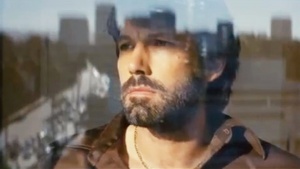
"The winner of the Academy Award for Best Picture" wrote Roger Ebert in Toronto, " will be Ben Affleck's tense new thriller Argo. How do I know this?" I don't know. Because you are stuck in 1975 and think you have just walked out of a screening of 3 Days of the Condor? Affleck's Argo is good, not great, certainly no Best Picture winner, and nowhere near as good as The Town, which was powered along by a crackajack performance from Jeremy Renner.  Affleck's direction has come on in just about every department — his framing, his pacing, his editing — but his casting has gone straight into a ditch. Argo may be the most unimaginatively cast movie of the year.  Every performance is a golden oldie, wheeled out one more time for good measure: Alan Arkin as the scabrous, loose-tongued movie producer ("If I'm going to make a fake movie, I'm going make a fake hit"), Bryan Cranston as the dutiful CIA sidekick, John Goodman as the dudiesh Mr Fixit who shows up in act II, his head so wacked it actually makes perfect sense in this wack-a-doodle world (He's turning in the same performance again in Robert Zemeckis's Flight, next month. Will Academy Members be able to remember which wack-a-doodle world he fixed best?). Most boringly of all, we have Affleck himself as the hero of the tale, Tony Menendez, the CIA extractor entrusted with smuggling five hostages out of Iran, not hidden under his shagpile-rug haircut, as you might think, but posing as members of a film crew making a Star-Wars rip-off called Argo, complete with furry aliens and nubile princesses. The Hollywood satire is flimsy and outsiderish, as if nobody thought it a good idea to burden us with anything too fresh. The stuff in Iran feels much more credibly researched, and  the ending is a nail-biter. If only he'd cast a big hot mess in the lead — someone barely holding it together like Downey, or Cage, or even Crowe, someone rugged and bearish to put a bit more fear into those hostages. Instead, Affleck plays it as rock-solid and reassuring as he can, taking his intonation down Cloonishly low to intimate geopolitical gravitas, and saying things like "I've never left anyone behind," but I've never really bought him as a hero. More importantly neither has he. He always looks guilty and shiftless, like a man who has been told he is too clumsy by his wife, and is  just seconds from bolting. Maybe it's those low-lidded eyes, or that loping gate — he always moves across the screen like someone who has grown 10 inches in his sleep and is still getting used to his new, enlarged dimensions. He is at his best when asked to play sunken, recessive men in films like Hollywoodland and Changing Lanes, but ask him to play the hero and he seems agonisingly self-conscious, as if deflecting bad reviews in his head. He may lack the shamelessness of the true leading men, like Douglas or Lancaster, or any of  those Golden Age cockatoos and preeners. But the film pulls through in the end, working up a nice sweat in the final stretch, and allowing  liberals like myself a rare opportunity to stand on our seats, check no-one is watching and deliver a tentative air-punch for Freedom! President Carter! Canada!  B

What's wrong with The Master

"There Will Be Blood establishes its central character, Daniel Plainview, as a deviously unscrupulous and manipulative sociopath, a tycoon-crackpot obsessed with oil and money at the expense of everything else, within its opening 40 minutes. Basically, he acts the same way, and does the same (immoral) thing, in scene after scene after scene after scene. Not to be overly lowbrow, but where’s the arc in that? Now, it must be said that Daniel Day-Lewis, channeling the voice of John Huston and the demeanor of Snidely Whiplash, throws a sickly mesmerizing party of one. He has great fun turning up the heat on Daniel’s monstrousness one meticulous Bunsen burner click at a time. Yet if there’s always a kind of suspense about what form his corruption will take, there’s never any doubt that he’s going to lie, and cajole, and dominate over and over again. The result is, on the one hand, a grand didactic parable of capitalism. (Message: It’s ruthless.) It’s also a movie in which there is no essential person to identify with....  When you watch There Will Be Blood, he doesn’t want you, really, to identify with anyone on screen. He wants all your identification reserved for him — for the eye of the storyteller.  
[In The Master] Joaquin Phoenix, as Dodd’s drunken, troubled loser of a disciple, certainly turns in a broodingly accomplished piece of disheveled-antihero acting, but the movie invites us to stare at him like a tormented animal at the zoo. We never really grasp the basic issue of why Dodd even bothers with this chump in the first place. Dodd, in the few moments that he reveals his own wasp sting of anger, is shown to be a human being with a passion for control, but the rest of the time he’s got his mask on, and he’s cut off from us too. Why? Because Paul Thomas Anderson now wants to sever our connection with the people on screen, so that nothing gets in the way of our link to the magnetic pull of his directorial voice. It’s a warped vision of what a movie is. But when a director who, in Boogie Nights, made the humanity of his characters sing now insists on making movies as if he’s “the master,” and is hailed for it like he’s the indie-crossover answer to Orson Welles, maybe it’s not necessary for us to love his films. Maybe worship, in its way, feels better than love.” — Owen Gleiberman
Couldn't agree with this more. The Master is a masterpiece of direction at the expense of being a good movie. The film is directed, excellently, and that's all there is to it. Everyone else is simply under orders — grist to his will. None of the actors give the slightest indication of understanding the various psychodramas they've been asked to act out, but then Anderson isn't really interested in coaxing performances out of them.  He's riffing on them like Hendrix on his guitar strings: putting them through the fuzz-box, amping up the distortion, looping the feedback loop. (If There Will Be Blood resembled a two-hour Hendrix solo, The Master resembles a two-hour solo by both Hendrix and Eric Clapton, simultaneously). In a cunning show of superiority over Hollywood character "arcs" Anderson's conception of character is almost entirely static.Our take on Hoffman's cult-leader — that he is a puckish phony — is the same in the first scene as in the last. Our conception of Phoenix — that he is a heartbeat away from breakdown — remains as fixed as jellied snake.  Anderson'fascination with spiritual entropy gives  his performers nowhere to go, except louder: the second half of the movie is basically the first half, replayed, only with more acting. It's like the second half of A Clockwork Orange replayed as a method workshop (Richard Brody actually pointed this out as a plus, as if an allegory of method acting were the sort of thing one regularly hears the public clamoring for).   "There will be skeptics, but the cult is already forming," wrote A O Scott in his review of The Master. "Count me in." Almost every reviewer performed a similar act of critical out-sourcing, darkly hinting that the film wasn't going to be to everybody's liking, but not giving any clue as to who these people were. Certainly not this reviewer, they quickly added. I haven't read one bad review of The Master  any of the quality outlets. It's the third best reviewed movie of the year (I haven't even heard of the top two. That's the kind of company it's keeping.) The nay-sayers, skeptics and unbelievers, on the other hand, have turned out to be.... those poor pumpkin heads, the public, who have quickly discovered Paul Thomas Anderson's masterpiece to be about as enjoyable as a hangnail. It's a masterpiece, alright: one of those solitary masterpieces Kubrick used to specialize in, wherein only the director (and those on this astral plane capable of channelling him) get to have any fun. 

Oct 3, 2012

Why the movies are not dead or dying

"The range of films made by the studios has shrunk—serious drama is virtually out of the question. A good, solid movie like Tony Gilroy’s “Michael Clayton” (2007), with George Clooney, wouldn’t have a shot at being made now. I suspect “The Social Network” got made only because Aaron Sorkin wrote the script. “Lawrence of Arabia,” from 1962, which is playing all over the county October 4th for one day on big screens, wouldn’t even be considered now. At the studiosthe blockbuster obsession joins with the opening-weekend obsession. Since grownups tend to wait for reviews or word from friends, they don’t go the first few days the movie is playing. That means, as it has for years, that people from, say, fifteen to twenty-five years of age exercise an influence on what gets made by the studios way out of proportion to their numbers in the population. My friends under about forty-five accept this as normal: They don’t know that movies, for the first eighty years of their existence, were essentially made for adults. Apart from the fall season, adults are mostly abandoned for the rest of the year. They wander about looking for something to see and usually retreat (quite rightly) into television.My younger friends are innocents who think they are wised-up modernists accepting the market realities. Realities that I can’t accept." — David Denby The New Yorker
I don't dispute the facts here. I wrote a book about them myself. I do dispute the jilted-lover tone, though. Can Denby not see how partial he sounds? But of course the older demographic are angry. They're no longer the apple of Hollywood's eye. (Just as women audience might feel passed over when Hollywood lost interest in them after the war). But to dress that up as an aesthetic argument — the movies have gotten worse — seems hopelessly partial. What he really means is "movies are not aimed at me any more." I feel his pain. Who likes being less powerful than you were the day before? But I don't buy it as film criticism. It seems to me that WALL-E is as easily good a movie for kids as Michael Clayton is a movie for adults. The level of artistry is the same, the level of craft is the same, the level of technique the same.  So it's not about corporate malfeasance: most kids don't respond to that as a theme. In much the same way that Michael Clayton resolutely fails to include any zero-gravity dancing. It wouldn't be appropriate in a movie for George Clooney fans (although I'm not entirely certain of that.)  

Oct 1, 2012

About that liberal bias in the polls

'But the pushback goes beyond coverage. Now even the polls themselves are being impugned, with suggestions that they are skewed by left-leaning math. Various conservative bloggers and pundits have complained that a slew of polls showing gains by President Obama were guilty of “oversampling Democrats” and “confirmation bias.”' — NYT
I do not get this. If I could control bias in the polls I would skew them Republican, not Democratic. I like the idea of my opponent have a misguided sense of his own strength, I want  him in the bubble, because  being underestimated is my biggest weapon, raises more cash and makes my final victory all the sweeter. Why on earth would I want to look and sound stronger than I am? Like most Republican conspiracy theories, this one runs afoul of basic plausibility. It's not so much that what they're saying is not true, but that their falsehoods are so insultingly flimsy.  As bad as they are on facts, their fictions are still worse. 

REVIEW: Life Of Pi (dir. Lee)

My review of Life of Pi for The Guardian:—
In his gently astonishing new movie, Life of Pi, adapted from Yann Martel’s 2001 best-seller, director Ang Lee melds together so many disparate elements — Aesopean fable and cutting edge 3-D technology, East and West, young and old — that he may have just succeeded in rebranding himself as the Obama of world cinema.  The fiercely urgent candidate of ’08, of course, not the stealth version currently working the stump. The sheer number of world religions given a shout-out in the movie — Hindu, Christian, Muslim, Buddhist — is enough to send Donald Trump’s comb-over scampering up the nearest tree trunk, looking for cover. 
 It takes a while to get going, like someone roused from their morning meditation, with lots of flowers and candles and people wearing kindly, fixed smiles suggesting Enlightenment, or as if they had been hit around the head with a brass pot. In French India, the young son of a zoo-owner collects world religions the way other kids collect stamps. “They were my superheroes,” he says, checking off a list of deities. Such good karma, sad to say, doesn’t necessarily make for good drama. You’re almost grateful for the storm when it arrives, sinking the boat bearing Pi, his family and their animal entourage to the New World, leaving the boy alone on a boat with one of his father’s tigers. They are soon pacing around one other with the same mixture of wariness and hungriness last seen on the faces of Jake Gyllenhaal and Heath Ledger in Brokeback Mountain. 
One of the things that tells you Lee is in his prime right now — a model of creative evolution  — is that his movies feel like total surprises when first announced but give of a satisfying smack of inevitability once seen. Immersing himself in the latest technology — 3-D, digital paint-boxes, motion capture and control — as Scorsese did last year to make Hugo, Lee summons delights with his fingertips, but where Hugo was cold to the touch, Life of Pi feels warm-blooded, the perfect summation of the principle powering Lee’s entire career:  still waters run deep. You see it both in the Zen minimalism of his compositions — check out the shots of sky reflected in a glassy ocean, the boat suspended in the middle as if hanging in thin air — and the sonar-like skill with which he sounds out the emotional depths of Martel’s tale. Lee’s pixels are animated by empathy.  
Life of Pi feels so simple, yet knotted with resonance, that you wonder why Lee bothered with the framing narrative in which a grown-up Pi chews over the spiritual implications of his tale with a writer in Toronto. For one thing, the argument they come up with for the existence of God turns out to bear a suspicious similarity to an argument for the all-round grooviness of magic realism. For another: Montreal. A nice city, but it’s neat patches of parkland and grey high-rises are no match for breaching whales, phosphorescent fish and crouching tigers, or the sight if Pi, howling like Job into stormy skies.  Hollywood has been waiting for this movie. Get ready for the year of the Tiger. A-
Tickets are available for the New York Film Festival (Sept 28th-Oct 14th)

Sep 30, 2012

REVIEW: Beasts Of The Southern Wild

My review of Beasts of the Southern Wild for Intelligent Life:-
Who would like to see a really good film about America? One of the chief virtues of being carpet-bombed by American movies has always been seeing what the country had been up to lately — how the old girl was shaping up. She’s been a little absent from screens of late. Sure, we get to see a generic New York smashed to smithereens every summer, but the giant vistas that once haunted John Ford, or the jittery streets that kept Martin Scorsese up nights seem to have faded from cinema screens. Woody Allen sends postcards home from London, Barcelona, Rome; even Scorsese went Parisian for Hugo; while the hip young auteurs circle the globe, collecting hosannahs from the international festival circuit: Wes Anderson’s latest, Moonrise Kingdom, is his first set on American soil in a decade. 
We’ll always have the Coens, of course, quietly at work stitching together a patchwork quilt of their country  — New York in the 1950s (The Hudsucker Proxy), Los Angeles in the 1940s (Barton Fink), Mississippi in the 1930s (Oh Brother Where Art Thou?) Minnesota in the 1960s (A Serious Man), Arkansas in the 1880s (True Grit), their quirky charm resting in their ability to see their country from the outside — strangers in their own land. Something of that mixture enlivens Beasts of the Southern Wild. Made on a shoestring by a resourceful New Orleans-based collective, and directed by 29-year-old Benh Zeitlin, the film came out of nowhere to snatch the Grand Jury Prize at Sundance and the Camera d’Or at Cannes, and rightly so. It’s easily the most original American film of 2012. 
It’s about a black six-year-old named Hush Puppy, played by newcomer Quvenzhané Wallis, who holds the camera’s attention with an indomitable poise, a thick thatch of hair, a feral scowl and a smile that could melt ice-caps.  “In a million years, when kids go to school, they’re gonna know: Once there was a Hushpuppy, and she lived with her daddy in the Bathtub,” she tells us, blessed with innate solipsism known to children and narrators of fiction, from Huckleberry Finn to Terrence Malick’s boys in The Tree of Life. She acts as if the centre of the known universe. In many ways, she is.  The film is set in the marshy Louisiana lowland called the Bathtub, whose hardscrabble inhabitants spend their time fishing, scavenging, breaking open crabs and drinking moonshine like there’s no tomorrow in rickety, water-logged shanties built from pieces of old cars and caravans, with occasional breaks to howl at the moon. 
On the outskirts of the swamp sits a city belching pollution — a grey Oz. There are melting ice-caps, and a flood, and finally monsters, but none of this amounts to a plot, any more that did the wanderings of Odysseus. Instead, Zeitlin tunes into the lyrical voodoo of childhood with a liquid feel for sequence and consequence: a blow to her father’s chest sounds to Hush Puppy like a thunderclap. A missing mother sounds her Siren call. This has to have been the movie playing in Spike Jonze’s head when he made Where The Wild Things Are: a howl-at-the-heavens ode to being child king, feet planted in the mud and mess of America, head filled with myth and magic. Imagine Mad Max as retold by Gabriel Garcia Marquez and you’re halfway there. 
Maybe that’s how America should look on screen right now, I thought as I left the theatre. Maybe that’s the American genre now: magic realism. It used to be realism, at the movies as much as on the page, but the role of national chronicler has largely fallen to television these days. In another era, Deadwood, The Sopranos, Mad Men, Boardwalk Empire, and Band of Brothers would all have been movies, but the industry that would have made them is now largely dead. In a recent New York Times article, Michael Cieply noted that of the 20 biggest hits of last year, only two — Bridesmaids and The Help —were set in anything recognizable as North America. In 1992, it was 15 out of 20. It’s one reason the Academy has gone fishing overseas for its big Oscar winners in recent years — The Artist, The King’s Speech, Slumdog Millionaire — always reserving a spot on the nominations for something flinty and home-spun from the indie-world: two year’s ago it was Winter’s Bone, which plunged audiences into the meth labs of the Ozarks.  This year, it will be Beasts of the Southern Wild. 
It’s not entirely free of the romanticism that dogs the genre, and it is now a genre: call it the American Exotic, ferrying news from the furthest pits of national squalor to the comfort of the urban movie house. Zeitlin is a Rousseauist. The drunken dysfunction of Hush Puppy’s family is lushly ennobled — her father even refusing medical treatment to keep the corrupting influence of civilization at bay — but the film gets you with all its glorious rot, like mud between your toes. It’s a sensory marvel. At one point, Hush Puppy and her family are fished out of the flood waters and forcible evacuated; such has been your immersion in the movie’s muck and clutter, that the entire scene, with its bright antiseptic lights and clean, white orderlies — “Like a fish tank without any fish” says Hush Puppy — plays like a report from Mars.  Actually, no. Just America. Which might be the same thing, these days.
A-

Free advice for filmmakers


  • WES ANDERSON: make a movie with only 3 characters in it
  • PAUL THOMAS ANDERSON: allow your characters the possibility of change. 
  • MARTIN SCORSESE: make a (fictional) movie about your parents
  • STEVEN SPIELBERG: make more star vehicles
  • ANG LEE: keep doing what you're doing
  • DAVID O. RUSSELL: ditto
  • BEN AFFLECK: stop acting in your movies
  • DAVID FINCHER: act in someone else's movie
  • SOFIA COPPOLA: adapt a fifties spy novel, nouvelle vague style
  • DARREN ARONOFSKY: make a big flop, work on your compassion
  • QUENTIN TARANTINO: write something that comes in under 100 minutes
  • JAMES CAMERON: leave Avatars 2 and 3 to someone else
  • MICHAEL MANN: make a war movie (maybe Napoleonic) involving lots of tactics
  • STEPHEN FREARS: make another movie set in America
  • TIM BURTON: ... something for Pixar?
  • TERRENCE MALICK: collaborate with an Oscar-nominated screenwriter
  • DAVID LYNCH: just make another goddam movie